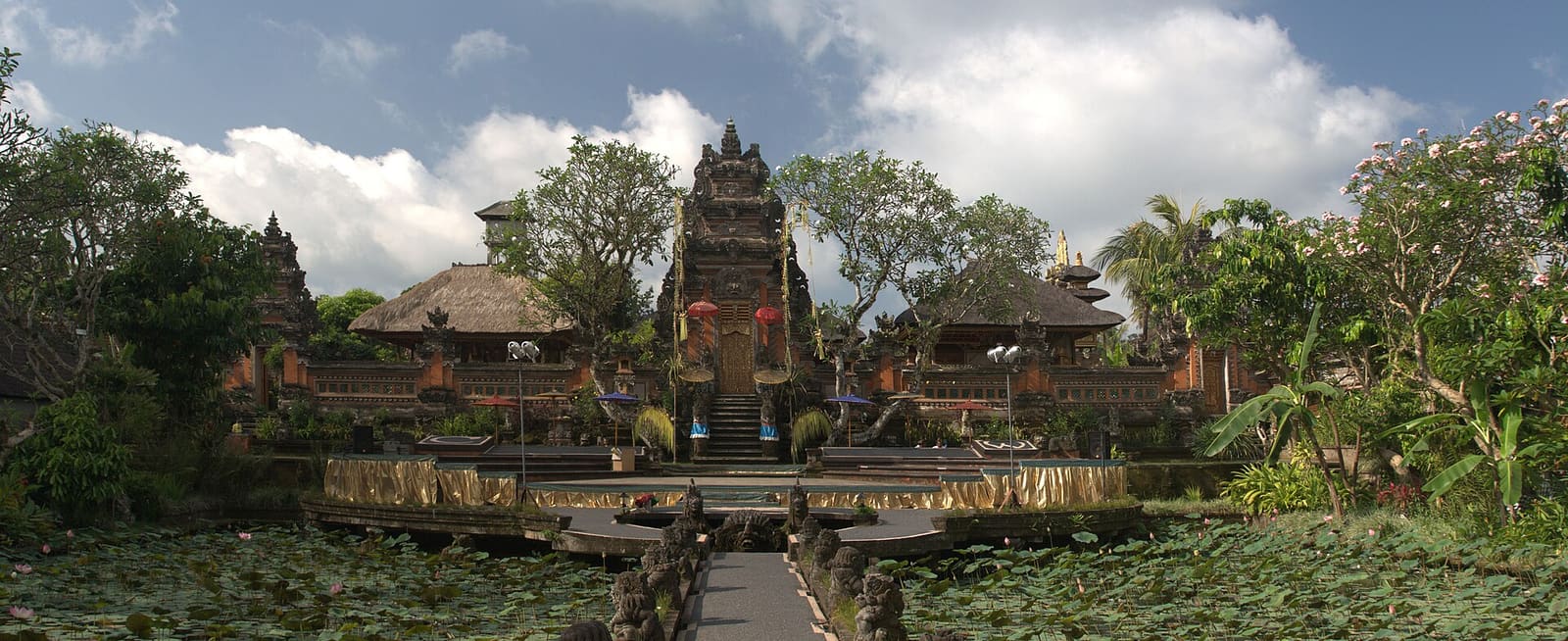
Ubud is a town in the hills of Gianyar regency in central Bali, roughly 35 km north of the airport. It grew around the palace of a local royal family whose patronage, from the 1930s onwards, drew painters, musicians and dancers — Balinese and foreign — and made the town a centre of the arts. Today it is a busy, slightly chaotic small town of cafés, galleries, yoga studios and guesthouses, wrapped around a core of temples and family compounds that still follow the Balinese Hindu calendar.
What makes Ubud special is that the culture is not staged for visitors. Offerings appear on doorsteps every morning, processions block the road on temple days, and the gamelan you hear at night may be a rehearsal rather than a show. The countryside starts a few minutes from the centre: rice fields, river gorges and villages specialising in woodcarving, silver or painting.
How long to stay
Two days is the minimum: one for the town (Monkey Forest, palace, Saraswati Temple, Campuhan Ridge Walk, an evening dance) and one for a countryside day of rice terraces, water temples and a waterfall. Three or four days is right for most people, adding a big excursion such as the Mount Batur sunrise or rafting, plus a cooking class. A week lets you slow down — which is what Ubud is best at.
What to see
The essentials fall into three groups: the town itself — palace, market, temples and dance; the landscapes around it — rice terraces, ridges, rivers and waterfalls; and the great sacred sites a short drive away, such as Tirta Empul, Gunung Kawi and Goa Gajah. Here are the places to build a trip around:
 Rice terraces, jungle & volcano
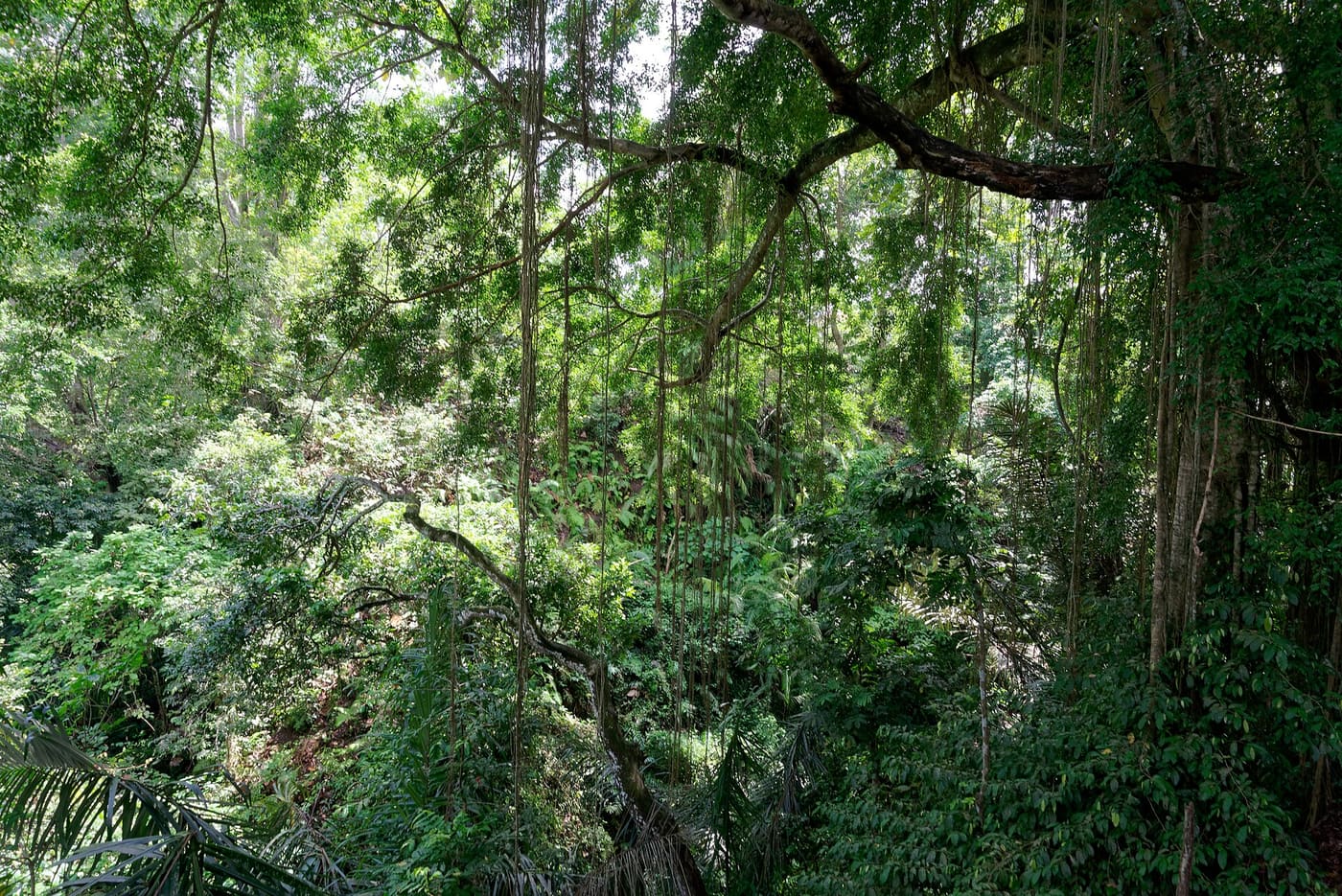
Sacred Monkey Forest Sanctuary
Temples, banyans and long-tailed macaques
A walled jungle ravine at the southern end of Ubud’s Monkey Forest Road, with three Hindu temples, giant banyan trees, a mossy stream gorge and several hundred long-tailed macaques living in loose troops.
 Rice terraces, jungle & volcano
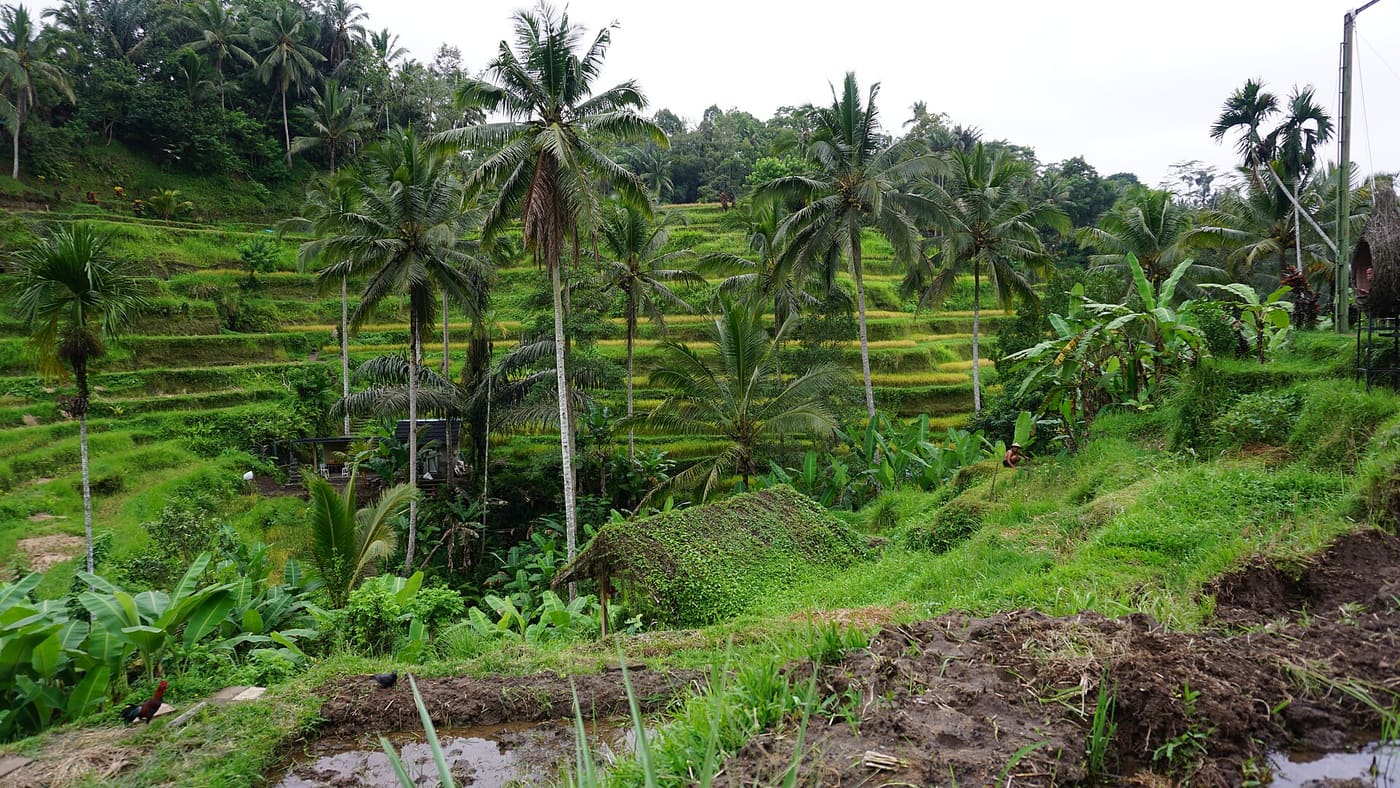
Tegallalang Rice Terraces
Bali’s most photographed rice valley
Steep green terraces carved into a valley about 10 km north of central Ubud, watered by the centuries-old subak irrigation system and framed by coconut palms — beautiful at 8 a.m., busy by 10.
 Rice terraces, jungle & volcano
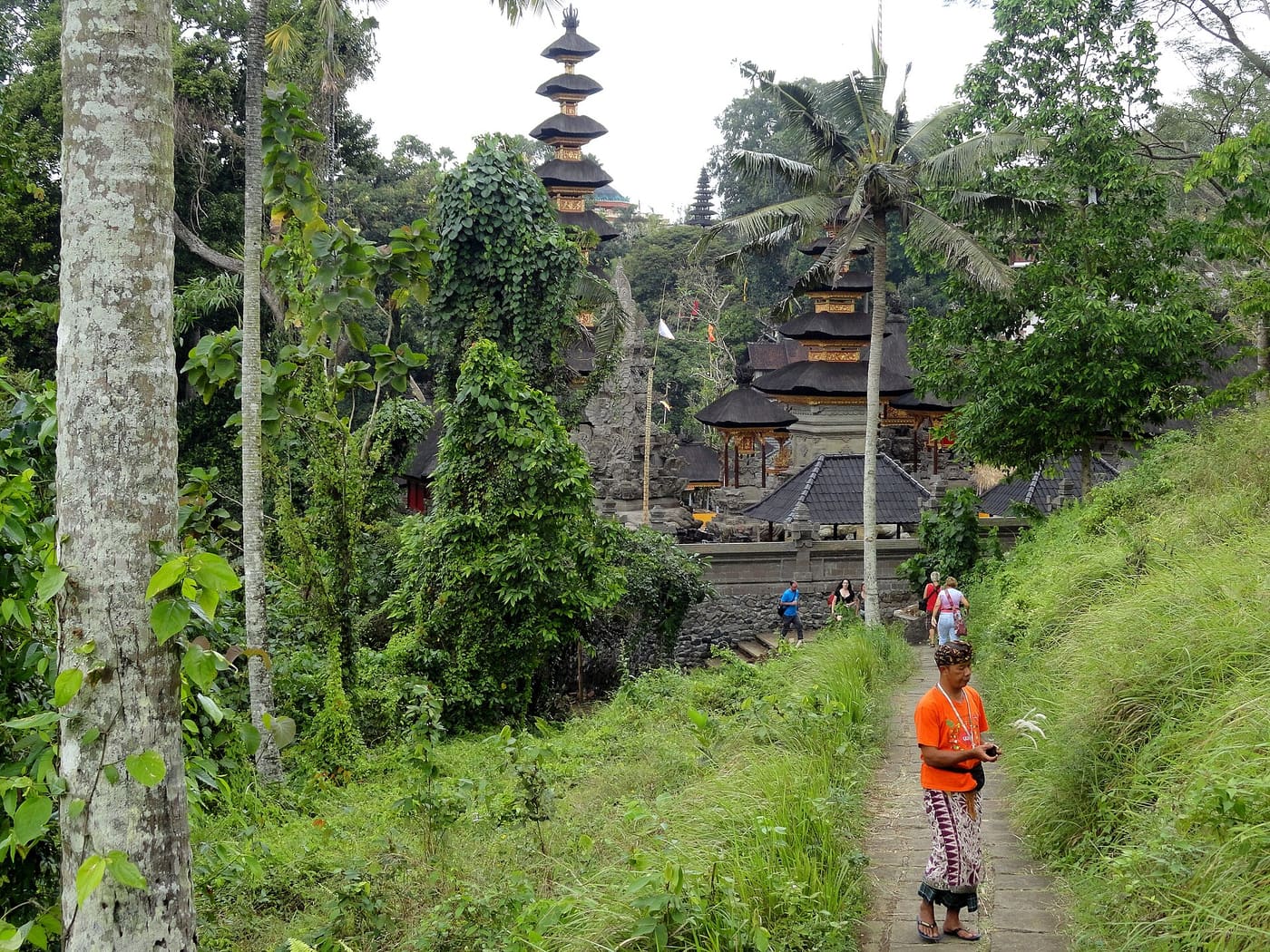
Campuhan Ridge Walk
A free ridge-top stroll between two rivers
A paved path along a grassy ridge between two river valleys, starting beside Pura Gunung Lebah on the western edge of town and continuing into the rice fields and cafés of Bangkiang Sidem village.
 Palace, dance & markets
Ubud Palace & Art Market
The royal heart of town
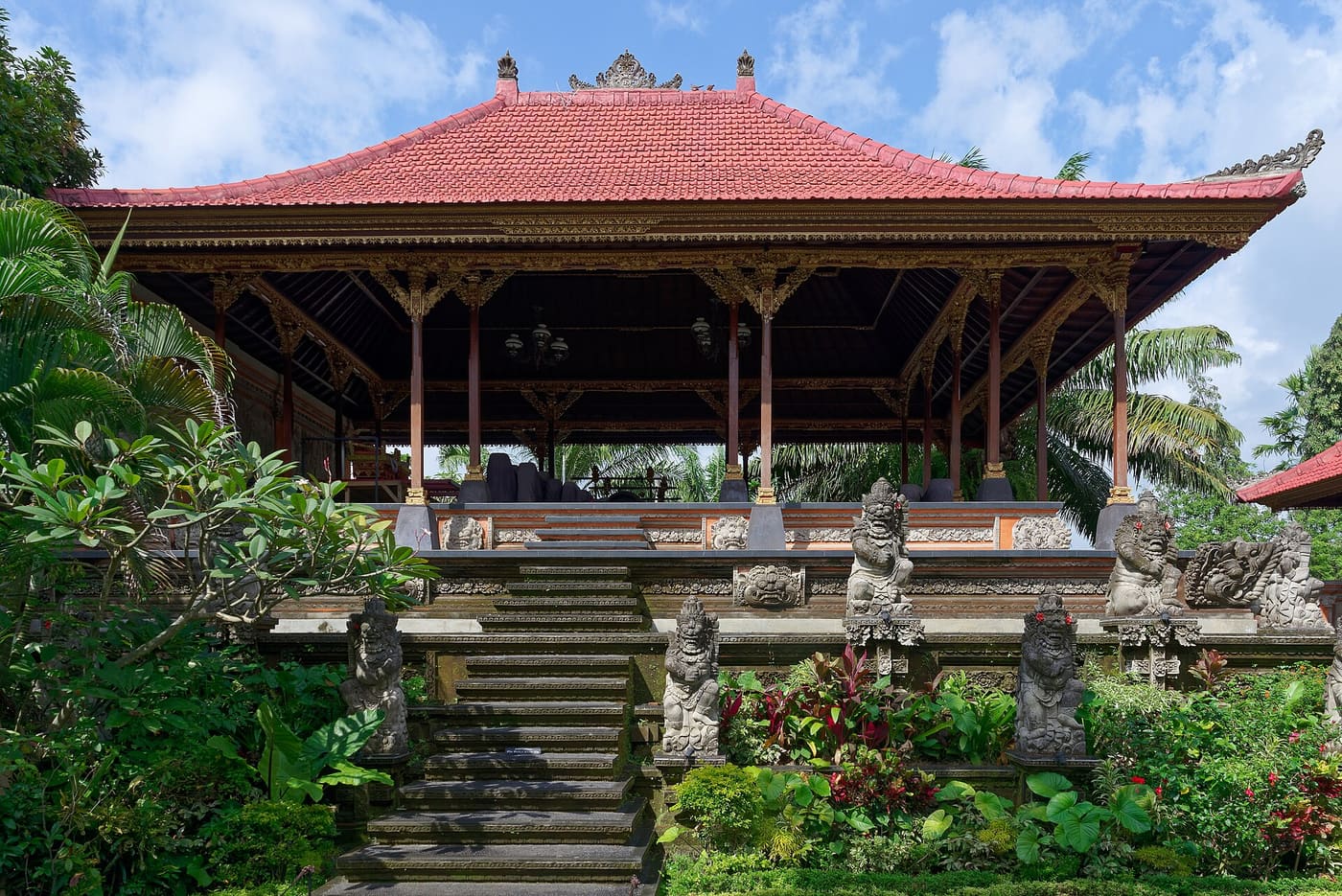
Puri Saren Agung, the palace of Ubud’s royal family, stands at the main crossroads with its carved gates and courtyards; across the road the Art Market sells sarongs, baskets, carvings and paintings.
Temple etiquette and sarongs
Balinese temples are active places of worship. To enter, cover your legs with a sarong and tie a sash (selendang) at your waist — major sites lend or rent them at the entrance, but buying your own at the Art Market is cheap and useful. Cover your shoulders. Do not climb on shrines or walls, do not stand higher than a priest, and do not step on offerings on the ground. Women who are menstruating are traditionally asked not to enter temples. Ask before photographing people at prayer, and never use flash during a ceremony.
Ceremonies
You will almost certainly meet a ceremony: a procession of women carrying towers of fruit and flowers on their heads, a temple anniversary (odalan) with gamelan and dancing, or — more rarely — a cremation. Visitors are generally welcome to watch respectfully from the side, dressed in a sarong and sash. Do not walk through a procession, give way on the road, and keep your voice down. Major festivals such as Galungan and Kuningan follow the 210-day Balinese calendar, so their dates change every year.
Food
Ubud has some of the best eating in Bali, from small warungs to fine dining. Look for:
- Babi guling — spit-roasted suckling pig with crackling and spiced rice, Bali’s most famous dish.
- Bebek betutu — duck rubbed with spice paste and slow-cooked, often needing to be ordered in advance.
- Nasi campur — rice with a selection of small dishes, the everyday warung lunch.
- Sate lilit — minced fish or meat wrapped around lemongrass sticks and grilled.
- Lawar — a mix of vegetables, coconut and minced meat with spices.
Ubud is also one of the easiest places in Asia to eat vegetarian or vegan. Drink bottled or refilled filtered water, not tap water.
Money and costs
The currency is the Indonesian rupiah (IDR). ATMs are everywhere in central Ubud; use machines attached to banks and shield your PIN. Cards are accepted at most hotels and many restaurants, but markets, small warungs, entrance fees and drivers usually want cash. Prices range from very cheap (a warung meal) to international levels (resort restaurants). Check current exchange rates before you go.
Bali tourist levy. Since 2024, foreign visitors to Bali have been required to pay a one-off tourism levy (IDR 150,000 per person at the time of writing), usually online via the official Love Bali system before arrival or at the airport. Rules and amounts can change — check the official information before you travel. This is separate from any Indonesian visa requirements.
Getting around
Central Ubud is walkable, though pavements are narrow, uneven and sometimes have holes, so look where you step. For anything further, most visitors use a hired driver, a tour or a ride-hailing app (Grab and Gojek). Be aware that pickups by app cars are restricted in some parts of central Ubud, where local transport cooperatives operate; drivers may ask you to walk to a nearby pickup point, and some hotels arrange local taxis instead. Scooters are everywhere, but only ride one if you are experienced and hold an international driving permit valid for motorcycles; wear a helmet. Traffic in central Ubud is heavy in the late afternoon.
Practical notes
- Visas. Entry rules for Indonesia depend on your nationality; many visitors use a visa on arrival or e-visa. Check official sources before travelling.
- Nyepi. On Bali’s Day of Silence (usually in March) the whole island, including the airport, shuts down for 24 hours; visitors must stay inside their accommodation.
- Health. Use mosquito repellent, drink filtered water, and be careful with the monkeys — rabies is present in Bali. Travel insurance is essential.
- Time zone. Bali is on Central Indonesian Time, UTC+8.
- Connectivity. Local SIM cards and eSIMs are cheap; Wi-Fi in cafés and hotels is generally good.
Days out from Ubud
Ubud is the best base in Bali for exploring the interior. Mount Batur and the Kintamani highlands are about an hour north; Tirta Empul, Gunung Kawi and Goa Gajah are within 45 minutes; the UNESCO rice terraces of Jatiluwih are a full-day trip. Beaches in Sanur are around 45–60 minutes away, and fast boats to Nusa Penida and Nusa Lembongan leave from Sanur. For Denpasar, the island’s capital, see our sister site Denpasar.com. See the full tour list for what is bookable.
