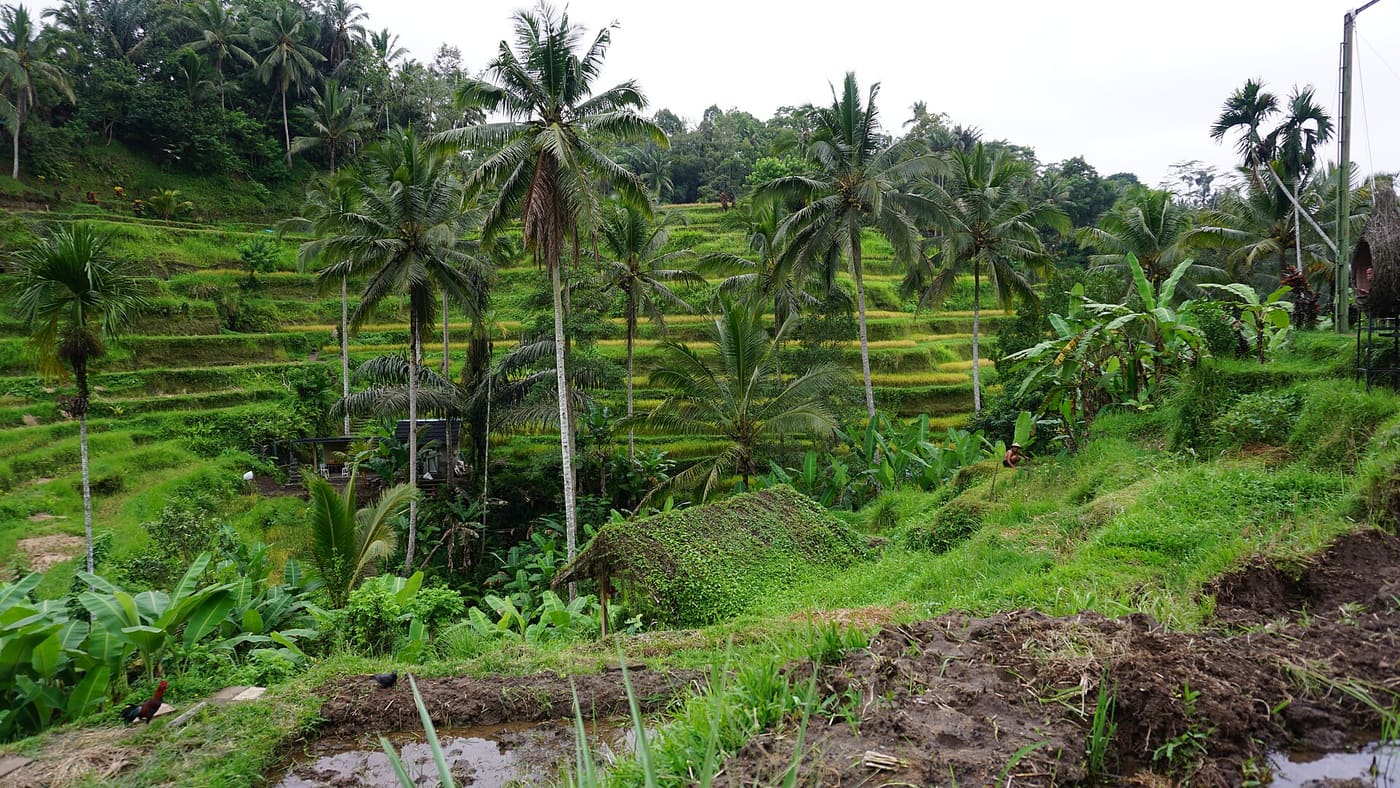
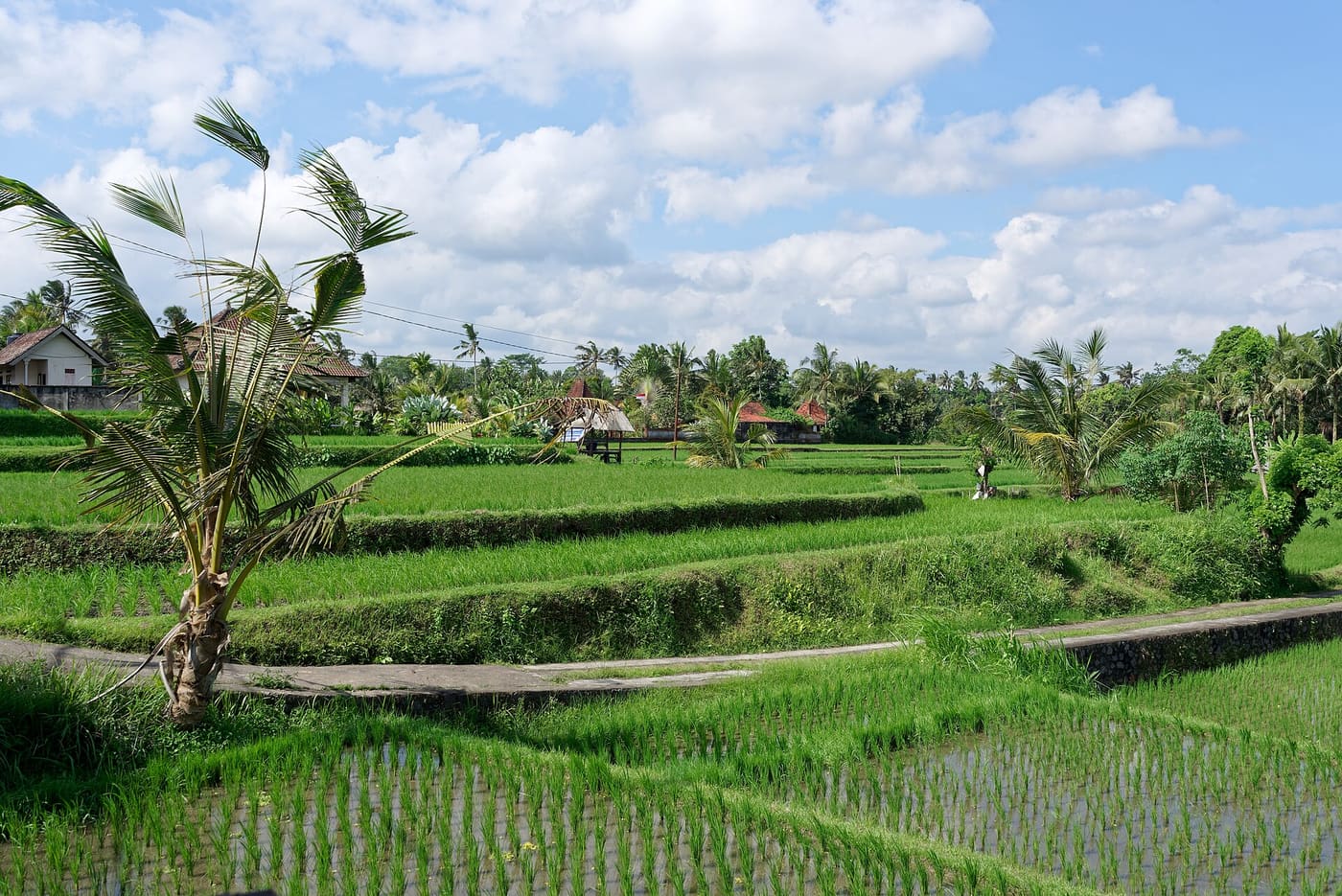
The terraces at Tegallalang, about 10 km north of central Ubud, are the image most people have of Bali: a steep valley carved into narrow green steps, with coconut palms rising from the edges and a little stream at the bottom. They are worked by local farmers and watered through the subak, the traditional cooperative irrigation system that Bali has used for around a thousand years.
The view from the road is free, but the real experience is walking down into the valley and up the other side on the paths between the paddies. Local landowners collect small fees or donations at several points along the way, which help maintain the paths.
Tegallalang is also a business. The rim is lined with cafés, souvenir stalls, giant swings and photo platforms, and the terraces get very busy from mid-morning. Go early, wear shoes with grip and you will see why it is famous.
Top things to do at Tegallalang Rice Terraces
Walk down into the valley
Steep steps lead from the road into the terraces. A loop down and back up the other side takes 45–90 minutes. The paths are narrow and slippery after rain, so take it slowly.
Arrive for the morning light
Between sunrise and about 9 a.m. the light is soft, the air is cool and the tour coaches have not yet arrived. It is the best time for photographs.
Coffee on the rim
Many cafés on the main road have terraces overlooking the valley. A coffee or fresh coconut with a view is part of the experience.
Try a swing — carefully
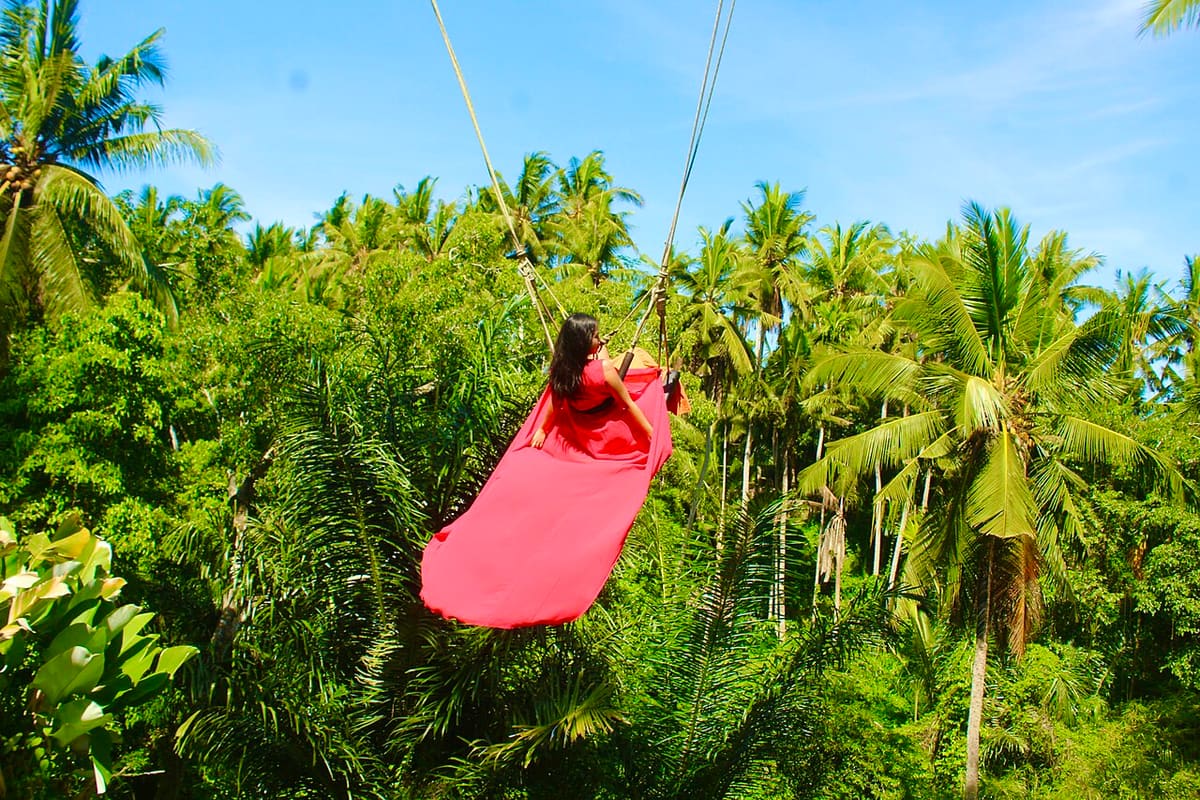
Several operators run swings and ziplines over the valley. Choose one with a proper harness and safety briefing, and skip it if anything looks improvised.
How to get to Tegallalang Rice Terraces
- Tegallalang is roughly 20–30 minutes by car north of central Ubud on the main road towards Kintamani, depending on traffic.
- A Grab or Gojek car, a hotel driver or a rented scooter are the usual options; there is no public transport worth relying on.
- Nearly every Ubud day tour stops here, and e-bike tours ride through the surrounding villages.
- Bring small notes in rupiah for entry and donation points along the path.
- Rice is on a cycle: depending on the month, the terraces may be flooded, bright green or freshly harvested and brown.
- Wear proper shoes rather than flip-flops, and carry water — the climb back up is steep and hot.
- If you want to see terraces without the crowds, consider the walks north of town or a day trip to Jatiluwih.
Best tours & tickets for Tegallalang Rice Terraces
These top-rated experiences are the easiest way to see Tegallalang Rice Terraces and make the most of the day:
 Private day tour from US$14
Ubud: Full-Day Rice Terrace, Monkey Forest & Waterfall
A private car and driver-guide for the day, following the route most visitors want: the Monkey Forest, the Tegallalang terraces, the water temple at Tirta Empul, a coffee plantation and the jungle pool at Tibumana Waterfall. Rated 5.0 from 6,000+ reviews.
- Monkey Forest, Tegallalang and Tirta Empul
- Coffee and tea tasting at a plantation
- Tibumana Waterfall, hotel transfer included
 E-bike tour from US$26
Ubud: 4-Hour Rice Terraces & Villages Fat-Tire E-Bike Tour
Fat-tyre electric bikes take the effort out of Ubud’s hills: ride through villages and past temples and traditional houses to the Tegallalang terraces, with a Balinese lunch and pickup from your Ubud hotel.
- Tegallalang Rice Terraces
- Villages, temples and traditional houses
- Balinese lunch, hotel pickup in Ubud
 Swing & zipline from US$20
Ubud: Swing, Zipline & SkyBike Rice Terrace Adventure
Ubud’s famous swings with extras: a jungle swing, a zipline and a SkyBike ride over a private rice terrace. Check the harness and listen to the safety briefing before you ride.
- Jungle swing
- Zipline and SkyBike above rice fields
- Private rice-terrace setting